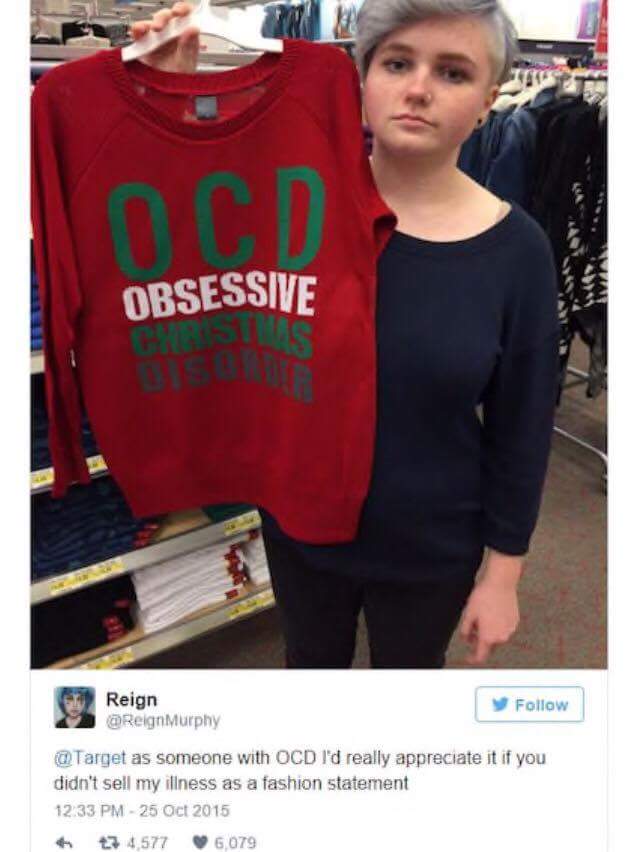
“I’m so OCD.” It is a pretty common phrase that I would guess I encounter about once or twice a month (either in person, on TV, in a book or article, etc). Other people with OCD may encounter it more or less, but no matter the frequency, it can be a difficult saying for a lot of us to handle. It is usually said by a non-OCD person who is describing how they are especially neat or detail-oriented in some aspect of their life. Those of us with OCD can get frustrated that the person not only doesn’t understand what OCD is but also that they can say this phrase in such a casual way as for many of us, OCD is a serious life issue. I have seen, through various forms of media and my own personal life, three ways to respond to this phrase and while it is not my place to declare which option is best as each person is different, I will include my thoughts on each.
- Get upset and call the person out— This option is where you just really let it go and you tell the person how hard OCD actually is and that the person needs to understand that OCD isn’t some joking, trivial matter. I would say that while this option can be pretty cathartic, it, for better or worse, doesn’t really garner a lot of public support. Sure, you may change one person’s view, but you have also yelled at them and embarrassed them for something they didn’t really know about.
- Calmly explain — This option may not have the pure shock value of option 1, but it is probably a better approach in terms of actually convincing people. This option can be a bit tough though if it is just some random stranger who says “I’m so OCD” as stopping to explain to them your mental illness and how it differs from their perception of it is a bit of an uncomfortable and strange thing to do in a grocery store or gas station. But if you know someone decently well (family member or coworker for example), then calmly explaining your OCD struggle to them can be a good way to raise their awareness.
- Do/say nothing — Simultaneously the easiest and hardest option as you have to balance knowing a person is wrong with expending your energy to correct their (mostly) harmless mistake. This option works well for people who prefer to keep to themselves and simply don’t want to have a potentially difficult conversation with others.
In my own life, I have tried to hit a balance of option 2 and 3. My everyday response is #3. I cringe a bit internally when I hear the phrase, but I try not to get upset with the person as they just don’t necessarily know what OCD is truly is. And that is ok. They are a ton of problems in the world that I have no idea about. And so I pick and choose my spots to educate on OCD. I volunteer with the National Alliance on Mental Illness (NAMI) and share my story with groups that may not have a full awareness of exactly what OCD is. This works for me as I am not constantly draining myself to correct every single person I meet and I can share my message to a large group of people when I am ready and comfortable. Finally, I think having a positive mindset and a bit of humor can help in the battle with OCD. I would proudly wear the ugly Christmas sweater in the above photo as frankly, I think it is pretty funny. And I totally understand why the person in the photo was upset, but for me, OCD already makes my life serious enough, so I try to take any opportunity I can to inject levity into my OCD struggle.
 Obsessive Compulsive Deprecation: Living with OCD at Work
Leave a comment